
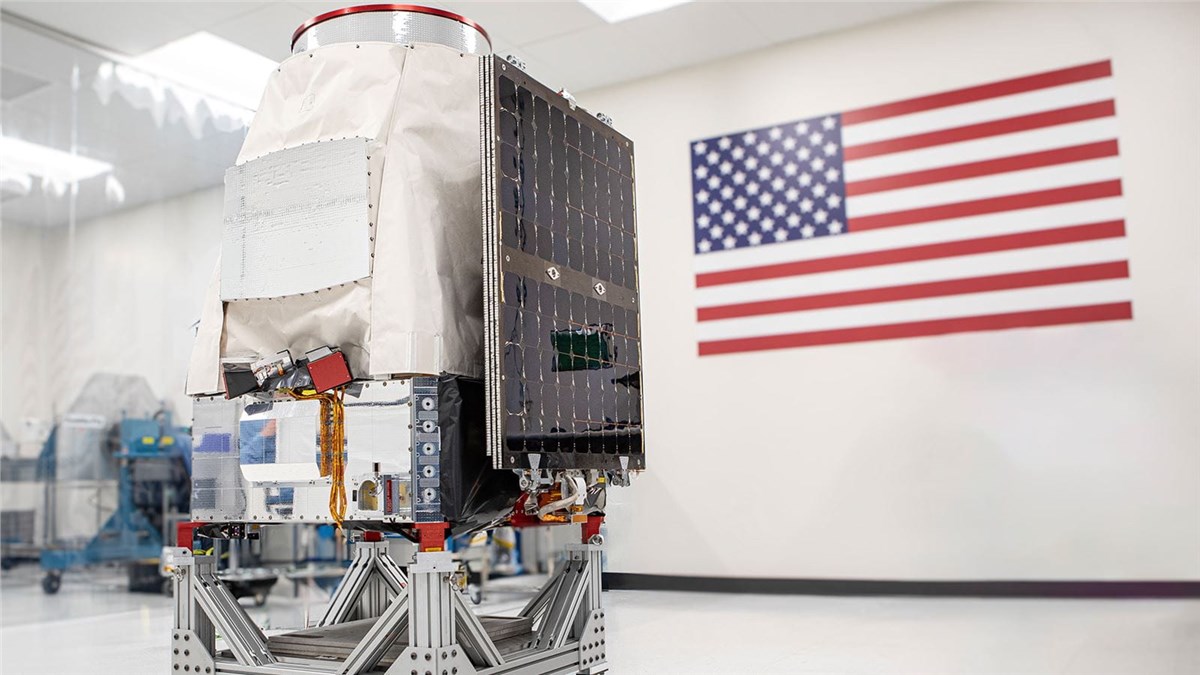
Blue Canyon Technologies, a subsidiary of RTX, has successfully launched a Saturn-class minisatellite for NASA’s pivotal Pandora mission. This program, managed by NASA’s Goddard Space Flight Center and Lawrence Livermore National Laboratory, aims to study the atmospheres of at least 20 exoplanets orbiting distant stars.
Pandora’s science hinges on observing planetary transits—the moment a planet passes in front of its host star. As the starlight filters through a planet’s atmosphere during this event, specific wavelengths of light are absorbed. By meticulously analyzing this altered starlight with a technique called spectroscopy, scientists can decode the atmospheric composition of these far-off worlds. The mission will specifically hunt for atmospheres dominated by hydrogen or water vapor, key indicators in assessing a planet’s potential habitability.
“Pandora features the largest telescope payload ever integrated onto a Blue Canyon spacecraft,” said Chris Winslett, General Manager of Blue Canyon Technologies. “Our Saturn-class platform, equipped with advanced guidance, navigation, and control systems, will provide the precision pointing and stability critical to the success of this important mission.”
Achieving these delicate measurements requires extraordinary stability, which is provided by Blue Canyon’s Saturn-200 bus. The company’s role extended beyond manufacturing the satellite; they were also responsible for integrating the spacecraft with its launch vehicle and conducting post-launch commissioning to ensure the bus was operational in space.
This launch marks a significant milestone for Blue Canyon, bringing its total number of spacecraft launched to 87 units. The Pandora mission exemplifies the growing capability of small satellites to contribute to major astrophysical discoveries, leveraging precision engineering to unlock the secrets of alien atmospheres and bring us closer to understanding our place in the cosmos.
