
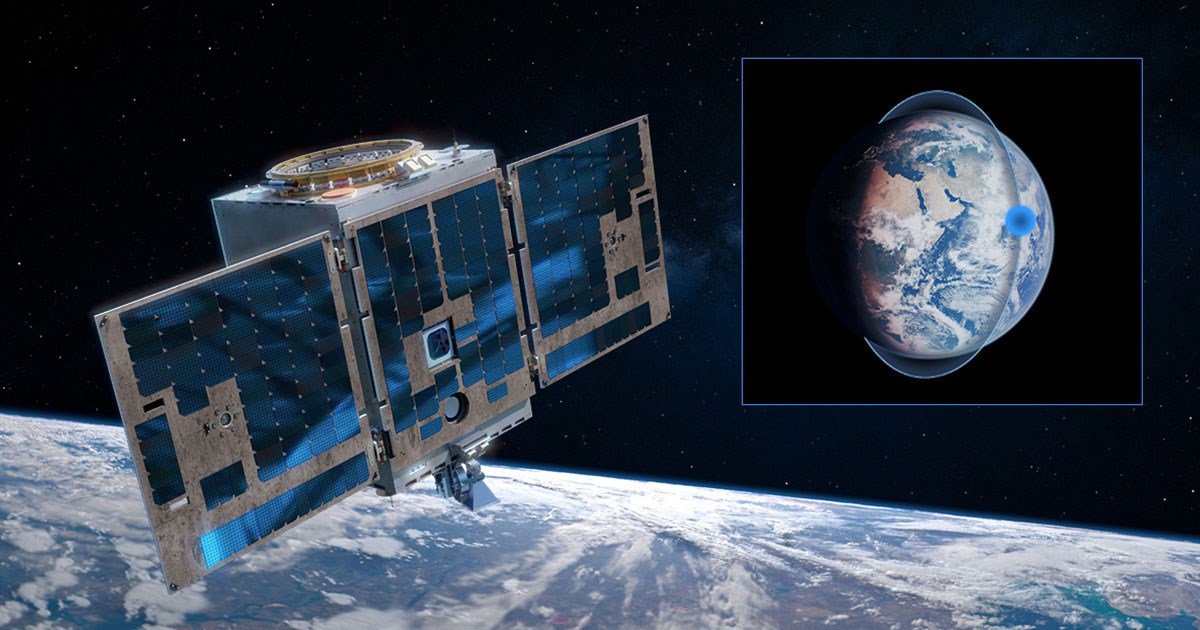
General Atomics Electromagnetic Systems (GA-EMS) has completed the integration of a critical payload for NASA’s TSIS-2 mission, marking a major step toward extending the continuous, decades-long record of solar irradiance data. The company successfully installed a dual-instrument science payload onto its dedicated GA-150 satellite bus at its facility in Centennial, Colorado.
The work included precision alignment and performance testing of the two primary instruments: the Total Irradiance Monitor (TIM) and the Spectral Irradiance Monitor (SIM). Developed by the University of Colorado Boulder’s Laboratory for Atmospheric and Space Physics (LASP) under a NASA Goddard contract, these sensors will measure the sun’s total energy output and its distribution across wavelengths. This data is vital for understanding how solar variability influences Earth’s atmosphere, climate, and ecosystems.
Following integration, the project achieved an Authority to Operate under NASA’s risk management framework, confirming its operational readiness. A comprehensive spacecraft test is planned to verify end-to-end communications and overall system performance ahead of the mission.
Unlike its predecessor, TSIS-1, which operates from the International Space Station, TSIS-2 will fly as an independent, free-flying observatory on the dedicated GA-150 satellite. This platform, designed and built by GA-EMS, will allow the mission to collect uninterrupted, high-quality measurements from a sun-synchronous orbit, ideal for long-term climate monitoring.
“Integrating the TSIS-2 payload onto the GA-150 is a significant milestone for our team and the mission,” said Scott Forney, president of GA-EMS. “The dedicated GA-150 platform will help ensure NASA receives the high-quality data this mission is designed to deliver.”
The mission continues a legacy of precision solar measurement. “Building on the outstanding success of TSIS-1… the TSIS-2 mission will allow our team at LASP to continue to improve this essential continuous solar data record,” said Erik Richard, Ph.D., LASP principal investigator for TSIS-2. He emphasized the partnership with NASA and General Atomics to deliver monitors that will extend this irreplaceable climate data series with unprecedented accuracy for the global scientific community.
