
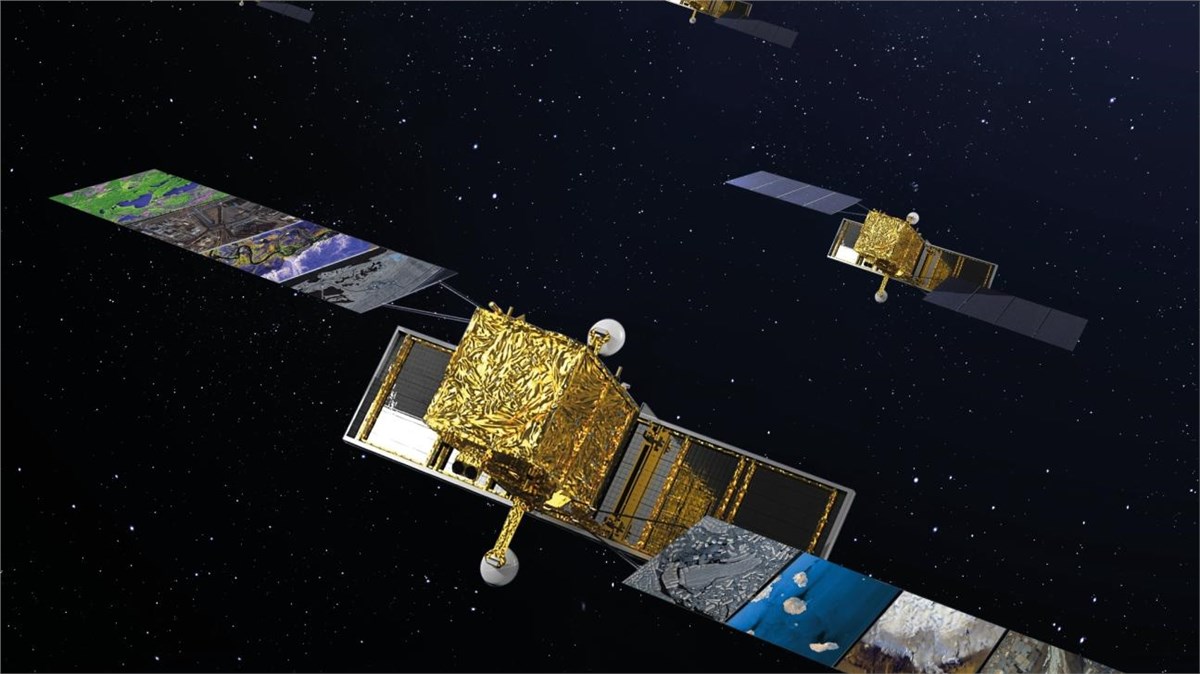
Italy’s third COSMO-SkyMed Second Generation (CSG) satellite has successfully launched, bolstering the nation’s advanced Earth observation network.
The spacecraft lifted off from Vandenberg Space Force Base, California, atop a SpaceX Falcon 9 rocket. Fifty-nine minutes after separation, Telespazio’s Fucino Space Center in Italy acquired the satellite’s signal, initiating a nine-day Launch and Early Orbit Phase.
This third satellite ensures the operational continuity and enhances the performance of the COSMO-SkyMed constellation, a dual-use system owned by the Italian Space Agency (ASI) and the Ministry of Defense. It features cutting-edge Synthetic Aperture Radar (SAR) technology, improving image quality, coverage area, and application range. The four-satellite CSG constellation is progressively replacing the first-generation system, setting a new global standard for space-based radar observation.
“The program reflects the technological and industrial excellence led by Leonardo together with our joint ventures,” said Massimo Comparini of Leonardo’s Space Division. “Earth observation is a strategic asset for security and sustainability.”
Thales Alenia Space, the program’s prime contractor, built the satellite. “This successful launch further demonstrates the company’s excellence in radar technology,” stated CEO Giampiero Di Paolo.
The industrial ecosystem involves Leonardo, providing key subsystems, and the joint ventures Thales Alenia Space and Telespazio, supported by numerous small and medium-sized enterprises. Telespazio developed the ground segment and manages all mission phases from Fucino. Worldwide data commercialization is handled by e-GEOS.
Since 2007, the COSMO-SkyMed system has acquired approximately 4.3 million images. Its data is vital for environmental monitoring, security, and emergency response. As a key contributor to the European Copernicus program, it supports the EU’s rapid mapping service for natural disasters, providing critical information within hours.
