
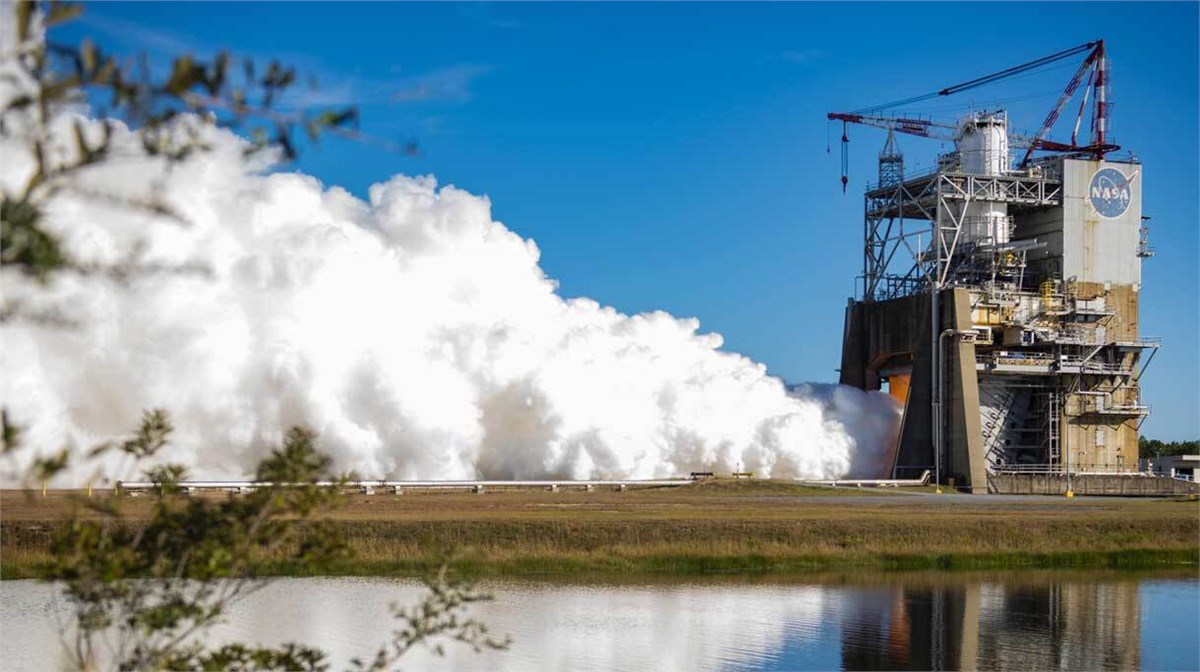
In a significant milestone for deep space exploration, NASA and industry partner L3Harris Technologies have successfully test-fired the second newly manufactured RS-25 engine for the Artemis V mission. This hot-fire test, conducted at NASA’s Stennis Space Center, is a critical step in verifying the engine’s performance and reliability for future flights. The test involved a full-duration, 500-second firing where the engine performed at 111% of its rated power level, a necessary thrust for the Space Launch System (SLS) rocket’s demanding missions.
The RS-25 engines are the workhorse propulsion system for the SLS, with four engines required to power the core stage of each rocket. These engines are fundamental to the success of the Artemis program, which aims to return astronauts to the lunar surface and establish a sustainable presence on the Moon. The data gathered from this test firing ensures the engine meets all stringent specifications for flight.
A key advancement for this engine and its recently tested predecessor is the incorporation of modern manufacturing techniques. By leveraging processes such as 3D printing, L3Harris has achieved a substantial 30% reduction in production costs compared to the RS-25 engines used during the space shuttle era. This focus on cost-effective production is vital for the long-term sustainability of the Artemis program. While the first four Artemis missions will utilize upgraded space shuttle-era engines, Artemis V will mark the debut of these newly produced, more affordable engines.
This progress underscores a collaborative effort between NASA and commercial partners to advance space propulsion technology. The continued testing and development of the RS-25 are pivotal not only for lunar missions but also for preparing the groundwork for future human missions to Mars, demonstrating a enduring commitment to pioneering the final frontier.
