
The European Space Agency’s Future Launchers Preparatory Programme (FLPP), in collaboration with industry partners like MT Aerospace, is actively integrating Artificial Intelligence to revolutionize rocket manufacturing. This digital transformation enhances key processes, improving precision, strength, and efficiency for launchers like Ariane 6.
A core focus is Shot Peen Forming, the cold-forming technique used to shape Ariane 6 fuel tank domes. Here, machine learning is a game-changer. By analyzing data from countless high-speed ball impacts, AI models can now predict metal deformation with unprecedented accuracy, guiding the process to achieve tolerances as tight as two millimetres.
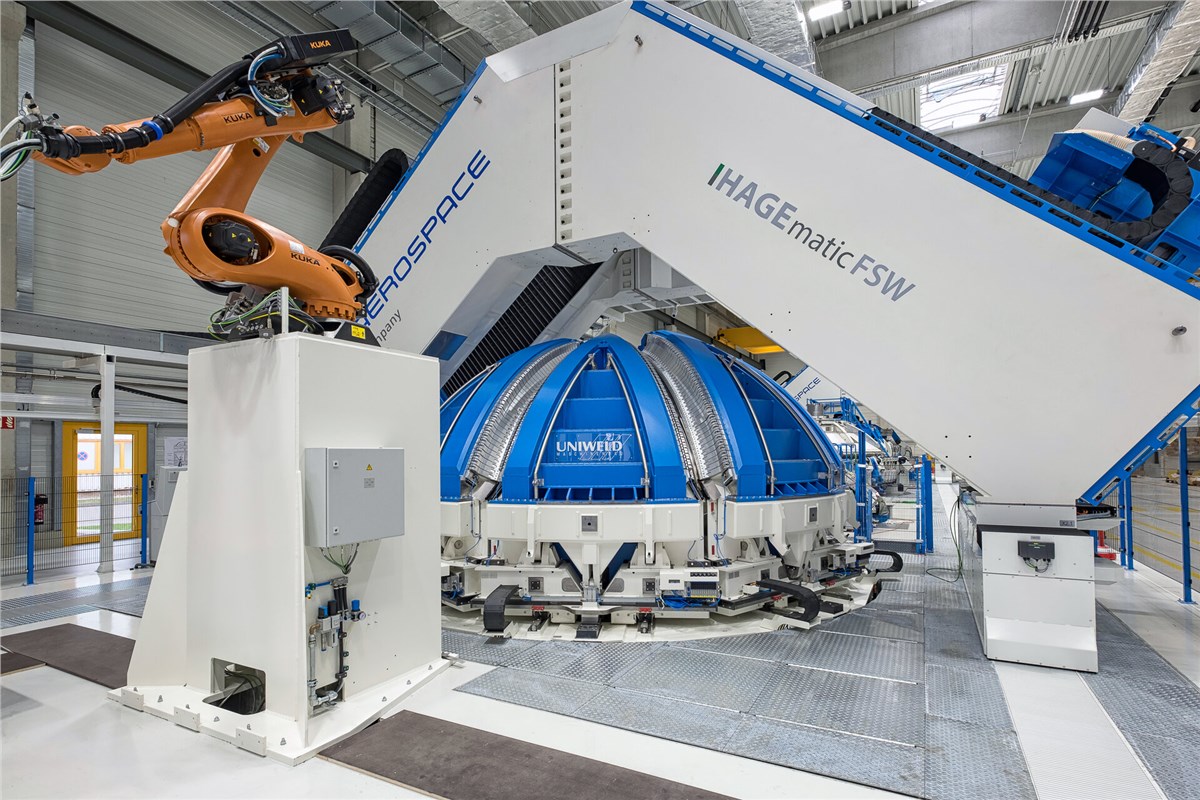
For joining components, Friction Stir Welding is being supercharged by AI. This superior technique creates robust bonds for rocket tanks. Now, machine learning algorithms process real-time data on weld force and temperature to optimize machine setup and perform automatic quality checks. This AI-driven evaluation of weld seams has slashed analysis time by 95% compared to manual inspection.
Beyond metal, AI is advancing composite manufacturing. In projects like Phoebus, which explores carbon-fibre tanks, automated fibre placement systems are being upgraded. New laser sensors, powered by machine learning models, instantly detect and classify defects during the layup process. This on-the-fly inspection minimizes stoppages and significantly accelerates production.
“AI and machine learning, combined with new digital technologies, are transforming launcher manufacturing,” says Daniel Chipping, ESA FLPP project manager for digitalisation. “We are seeing tangible benefits across all materials, from automating complex analysis to streamlining production flow.”
These initiatives under the FLPP are crucial for de-risking the development of next-generation space transportation. By pioneering these smart manufacturing technologies today, ESA is building a stronger, faster, and more innovative foundation for the rockets of tomorrow.
