
Earth’s orbital highways are gridlocked with junk. What was once an infinite frontier is now a crowded zone where defunct satellites and discarded rocket parts race at 28,000 km/h, threatening the technology we depend on daily.
Space may seem vast, but the valuable real estate in Low Earth Orbit (LEO) is finite. We rely on this region for everything from GPS directions to banking timestamps. However, alongside the 10,000+ active satellites floats a cloud of hazardous debris—old spacecraft, collision fragments, and even tiny paint flecks. At hypersonic speeds, an object the size of a marble carries the force of a hand grenade, capable of disabling a multi-billion dollar satellite or endangering astronauts.
The core risk is a cascade effect known as the Kessler Syndrome. If congestion continues, one collision could trigger a runaway chain reaction, creating a debris belt that renders entire orbits unusable for generations. This would effectively trap humanity on a planet without real-time weather forecasting or global communications.
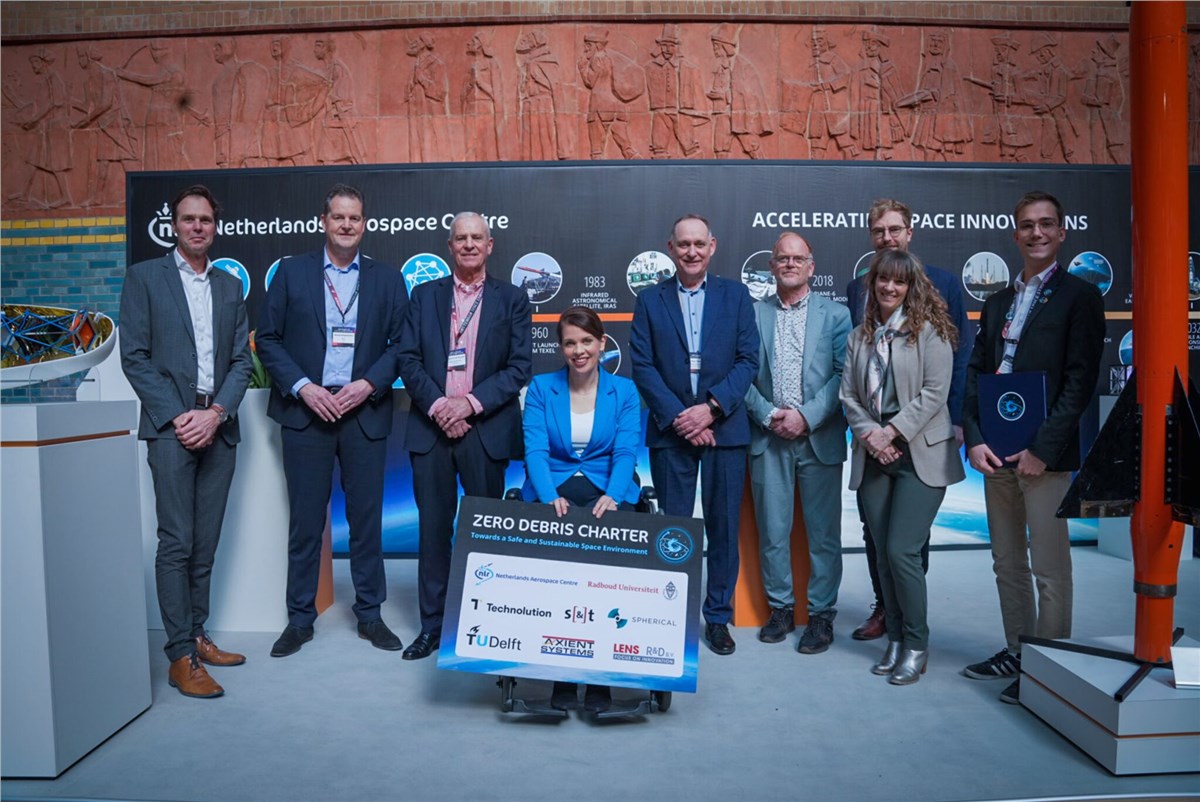
To prevent this gridlock, the global space community is rallying behind initiatives like the European Space Agency’s Zero Debris Charter. This voluntary pledge aims for a significant goal: by 2030, new missions must leave no long-term trace in orbit. It’s a commitment to responsible design, ensuring satellites are built to be disposed of properly at the end of their lives.
Organisations like NLR are contributing by engineering the solutions. By modeling collision risks and developing safer de-orbiting strategies, they are applying aviation-style safety protocols to the cosmos. A key area of focus is Very Low Earth Orbit (VLEO). While harder to operate in due to atmospheric drag, these altitudes offer a unique benefit: they are “self-cleaning.” Debris that drifts into VLEO burns up quickly, preventing long-term clutter.
The window to act is narrowing. With satellite megaconstellations multiplying, the choice is clear: coordinate now or risk being locked out of the very space that powers our modern world.
