
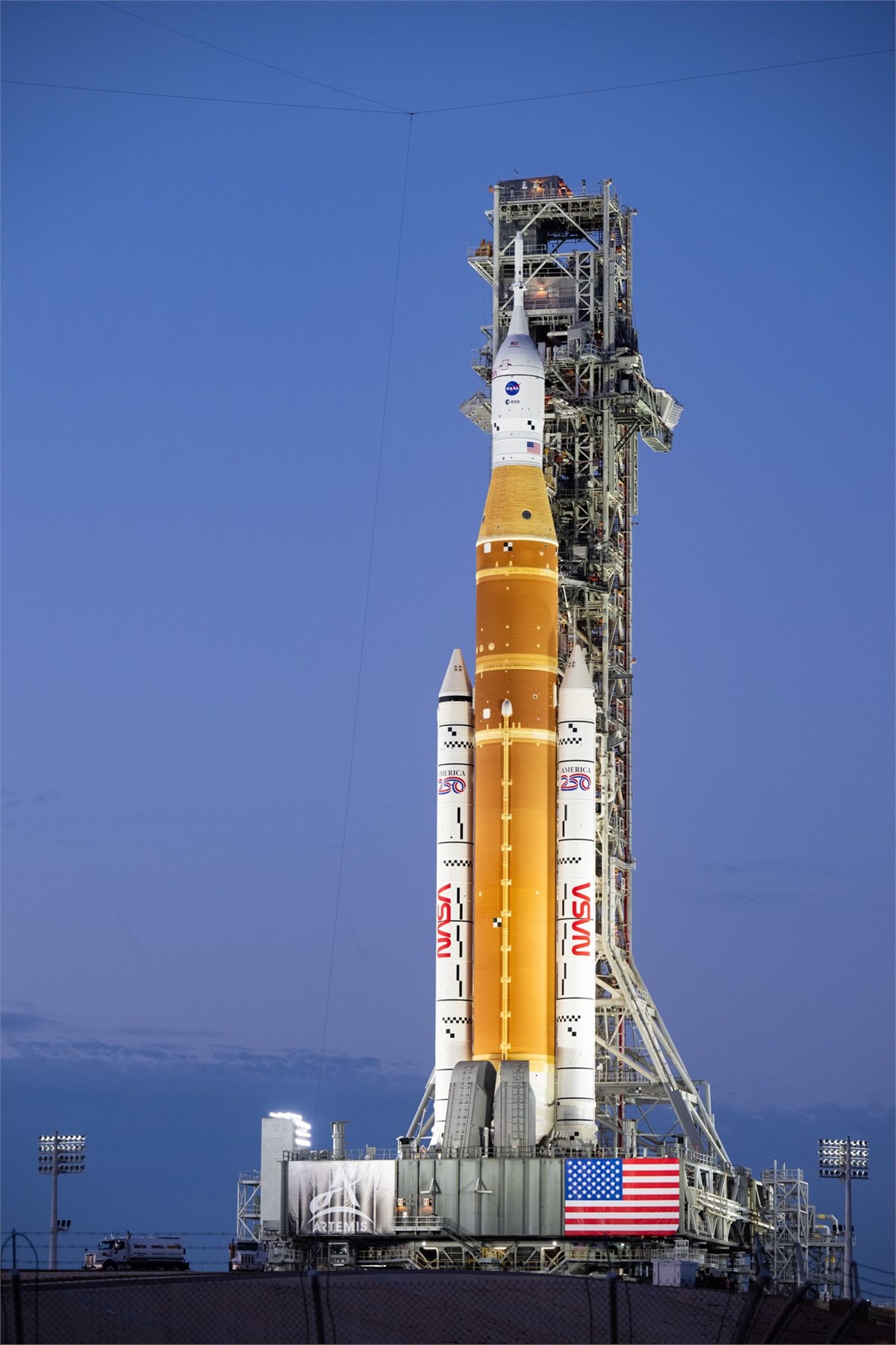
On the evening of Saturday, a key milestone was achieved for America’s return to the Moon. NASA’s colossal Artemis II rocket, comprising the Space Launch System (SLS) and the Orion spacecraft, arrived at Launch Pad 39B at Kennedy Space Center in Florida. The journey from the protective Vehicle Assembly Building (VAB) spanned nearly 12 hours, covering four miles at a crawling pace.
The move was executed by the legendary Crawler-Transporter 2, one of the largest ground vehicles ever built. With the 322-foot-tall rocket and spacecraft stacked on its back, the crawler inched along at a maximum speed of less than one mile per hour. This deliberate, careful pace ensured the precious cargo’s stability during the transit.
Upon exiting the massive VAB, the operation included a planned pause. Teams used this time to reposition the crew access arm, the critical bridge that astronauts will cross on launch day to enter the Orion capsule. Now at the pad, the rocket enters a new phase of testing. In the coming days, engineers will conduct a “wet dress rehearsal,” a critical full-scale practice of the launch countdown.
Scheduled for no later than February 2, this test will see teams load the SLS core stage with super-cold liquid hydrogen and liquid oxygen propellants, run through the final countdown sequence, and then safely drain the tanks. This rehearsal validates procedures, software, and ground systems under cryogenic conditions. Depending on the results, additional tests or a return to the VAB for adjustments may follow.
The success of these pad tests sets the stage for the historic Artemis II mission. This flight will carry NASA astronauts Reid Wiseman, Victor Glover, and Christina Koch, along with Canadian Space Agency astronaut Jeremy Hansen, on a 10-day voyage around the Moon and back. It will be the first crewed mission to lunar distance in over 50 years, testing all systems with astronauts aboard.
Artemis II is a pivotal step in NASA’s broader exploration goals. It paves the way for Artemis III, which will land astronauts near the lunar South Pole. This sustained lunar exploration is designed to develop new technologies and operational experience, forming the essential foundation for humanity’s next giant leap: sending the first astronauts to Mars.
