
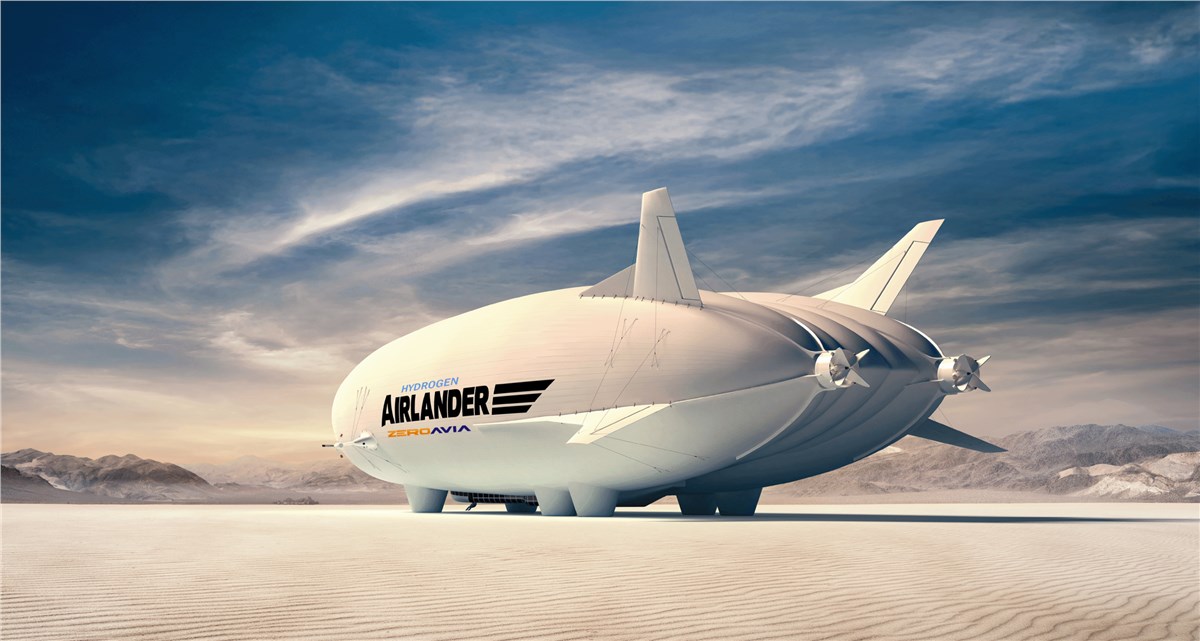
ZeroAvia and Hybrid Air Vehicles (HAV) have announced a strategic partnership through a Memorandum of Understanding to develop a hydrogen-electric variant of the Airlander 10 aircraft. This collaboration aims to advance zero-emission aviation by integrating ZeroAvia’s innovative propulsion technology into HAV’s unique hybrid air vehicle.
The Airlander 10 is a hybrid aircraft that utilizes a combination of aerostatic lift, aerodynamic lift, and vectored thrust. With a payload capacity of 10 tonnes and a maximum range of 4,000 nautical miles, it offers a versatile platform. While the initial model will use diesel engines, already reducing emissions by up to 90% compared to similar aircraft, the integration of ZeroAvia’s hydrogen-electric powertrain is the critical next step. This upgrade will enable fully zero-emission flights for over 100 passengers while also lowering maintenance costs.
ZeroAvia brings its ZA600, a first-generation 600kW hydrogen-electric powertrain, to the partnership. This system has already achieved significant regulatory milestones, garnered hundreds of pre-orders, and secured launch customer airlines. The Airlander’s spacious hull is ideally suited for housing the required hydrogen storage and the advanced fuel cell systems, making it a perfect candidate for the first wave of certified hydrogen aviation technology.
The agreement extends beyond the Airlander 10. The companies will also explore applying ZeroAvia’s hydrogen-electric technology to HAV’s future larger aircraft and will assess the necessary hydrogen fuel infrastructure to support planned Airlander 10 operations.
Leadership from both companies emphasized the partnership’s significance. Tom Grundy, CEO of Hybrid Air Vehicles, stated that ZeroAvia’s progress in developing hydrogen-electric propulsion makes them an ideal partner to achieve HAV’s goal of a fully zero-emission aircraft. Val Miftakhov, Founder and CEO of ZeroAvia, highlighted the Airlander’s potential to open new markets with its efficiency and operational flexibility, noting that both companies are UK-based innovators with plans to create hundreds of high-skilled jobs and expand their manufacturing footprints.
