
The concept of a self-repairing spacecraft is shifting from science fiction to engineering reality, thanks to a new European partnership. The project, named Cassandra, aims to equip future space vehicles with composite structures that can automatically detect and mend damage.
Led by Swiss companies CompPair and CSEM, along with Belgium’s Com&Sens, and supported by the European Space Agency (ESA), the initiative retrofits an existing self-healing material called HealTech for the extreme environment of space. The technology works by embedding a network of fibre-optic sensors within a carbon-fibre composite. When an impact or stress causes a micro-crack, the sensors pinpoint the exact location.
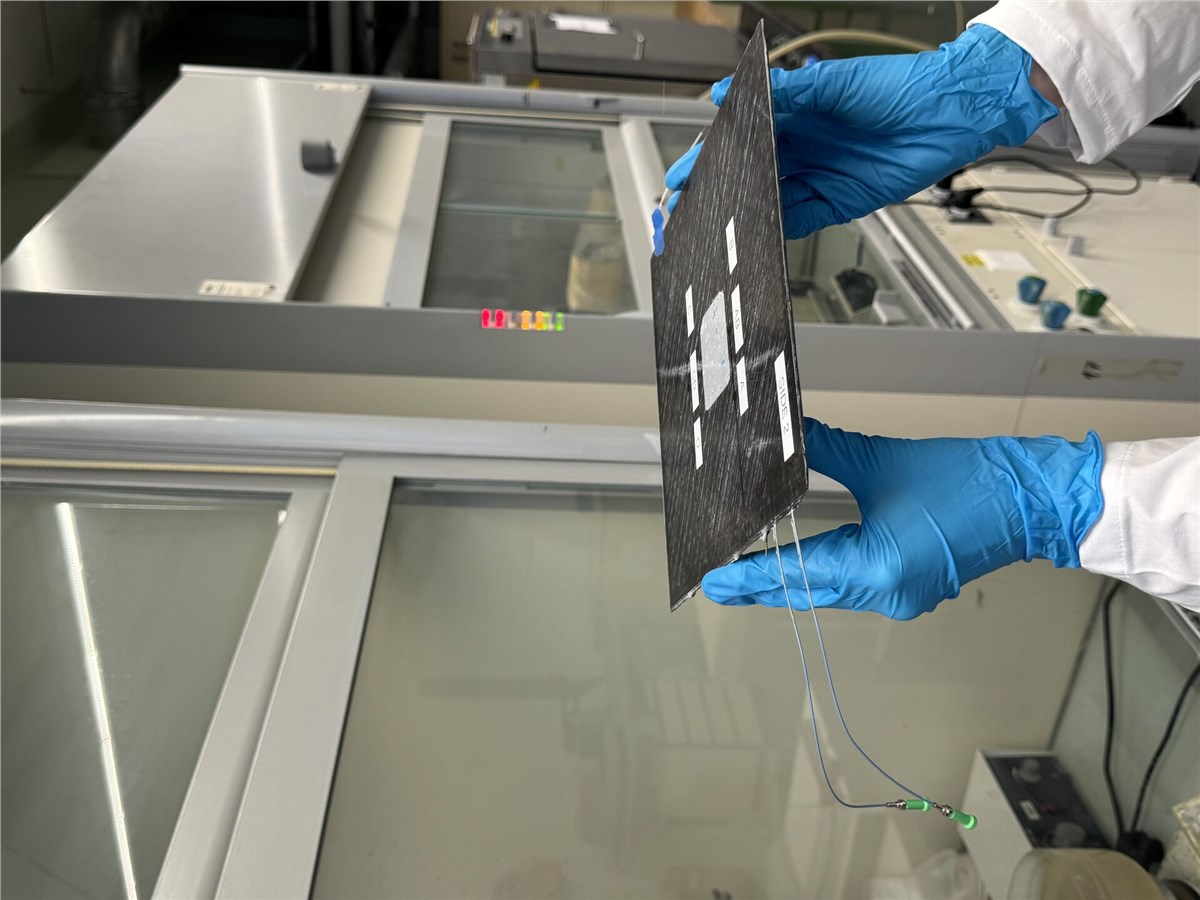
The material is then activated through integrated 3D-printed aluminium heating grids. Raising the temperature to between 100 and 140 degrees Celsius triggers a healing agent within the composite to flow into the crack and seal it, effectively restoring the structure’s integrity autonomously. This process is vital for reusable launchers, which endure repeated stress during flights to space and back.
Initial tests on material samples ranging from small coupons to 40cm panels have proven successful, validating the system’s ability to monitor damage, heat uniformly, and repair itself. The material also passed thermal shock tests simulating the harsh conditions of a cryogenic propellant tank.
“This closes the gap between science-fiction and reality,” said Robin Trigueira, CTO of CompPair. The team’s next goal is to scale the technology to build a full-sized cryogenic fuel tank. By enabling lighter, more durable, and self-maintaining spacecraft, the Cassandra project promises to reduce mission costs and waste, paving the way for a new generation of sustainable European space infrastructure.
